Loading...
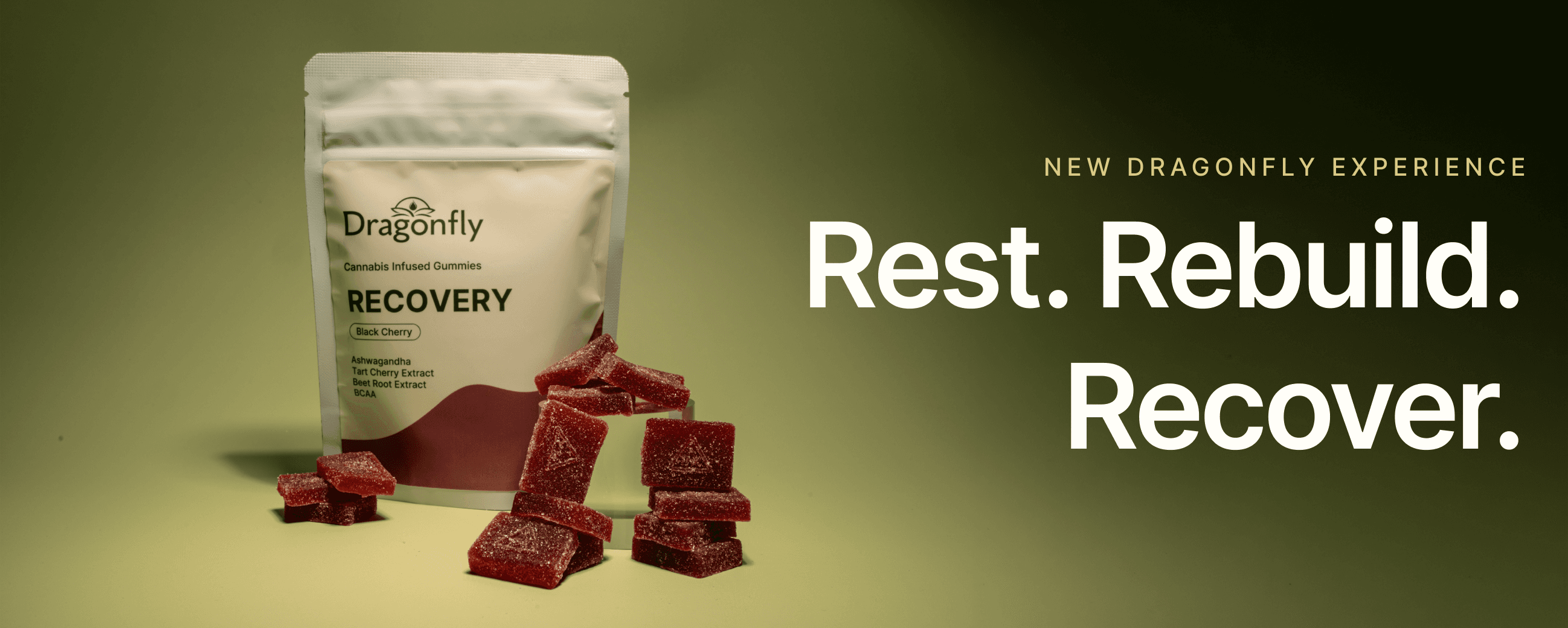
Reset. Rebuild. Recover. Dragonfly’s new experience gummy.
Getting injured has a way of making everything else stop. The workout routine, the weekend plans, the version of yourself that moved without thinking about it. And then comes the part nobody talks about much: the long middle stretch where you're not hurt enough to be in crisis, but not healed enough to feel normal.
More Utah patients are quietly navigating that stretch with cannabis. Not instead of their care plan. Alongside it.
Here's what they're saying — and what's worth knowing.
The recovery gap traditional medicine doesn't always address
Standard post-injury care is built around acute intervention — manage the immediate injury, reduce swelling, protect the tissue. What it often underserves is the period that follows: the low-grade soreness that lingers, the disrupted sleep that stalls healing, and the psychological weight of being physically limited.
Patients report that cannabis — particularly CBD-dominant formulations — has become part of how they navigate that middle ground. Not as a substitute for physical therapy or physician guidance, but as something they reach for in the hours when the formal care plan doesn't reach.
Why patients are choosing CBD-forward formulations
The distinction between THC-dominant and CBD-forward products matters in a recovery context. Patients seeking post-injury support tend to gravitate toward higher-CBD ratios — particularly 1:3 THC to CBD formulations — citing a preference for the calming, non-intoxicating quality of CBD without fully eliminating THC.
What they're often describing is balance: enough support for the body's natural response, without the headspace disruption that can interfere with rest or daytime function.
The role of functional botanicals
Cannabis doesn't exist in isolation. Increasingly, patients are looking for formulations that pair cannabinoids with botanicals with established wellness histories. A few worth knowing:
Ashwagandha — An adaptogen with a long history of use for stress and physical recovery. Patients navigating injury-induced stress and disrupted routines often find adaptogens useful.
Tart Cherry Extract — Naturally rich in compounds associated with antioxidant activity and physical recovery. Long used by endurance athletes for post-exertion soreness.
BCAAs (Branched-Chain Amino Acids) — Building blocks of muscle recovery. Found in food and supplemented widely in athletic recovery contexts.
Beetroot Extract — Associated with circulation support and physical endurance. A frequent addition in functional recovery formulations.
When these botanicals are paired thoughtfully with a cannabinoid profile designed for recovery, the result is something more intentional than a standard edible.
What patients report
Patients who use cannabis in a recovery context most commonly describe three areas of relevance: managing soreness and physical discomfort, improving sleep quality during the healing period, and reducing the anxiety and stress that often compounds an injury.
The common thread isn't a single dramatic outcome — it's consistency. Patients report returning to the same product because it fits the routine without disrupting it.
Dragonfly Recovery Gummy was formulated with this patient in mind.
A 3:1 CBD to THC black cherry gummy with Ashwagandha, Tart Cherry Extract, BCAAs, and Beetroot Extract. Crafted in small batches. Made with all-natural fruit dyes.
It's the most intentionally built edible in the Dragonfly line — designed for the patient who approaches recovery the way they approach everything else: with intention.
Available now at Dragonfly Wellness — SLC and Price.

Stay Connected
Sign up for exclusive offers and discounts, and be among the first to learn about our new products.